

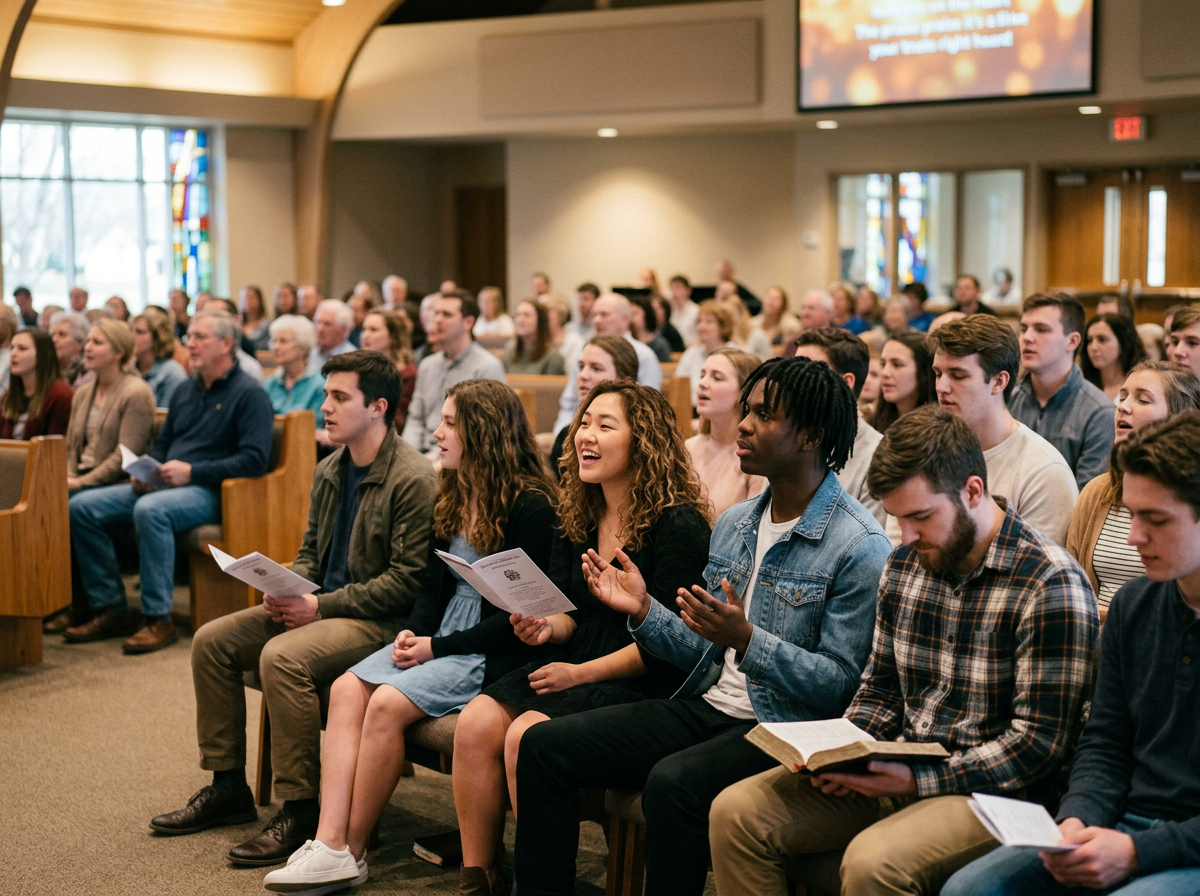
Army chaplains in the United Kingdom say they are witnessing a “quiet revival” among new recruits, marked by more baptisms, fuller chapel services and increased spiritual enquiry, even as official statistics show long-term decline in Christian affiliation across the forces.
Reporting by BFBS Forces News, drawing on evidence from the Royal Army Chaplains’ Department, describes faith as “on the rise across the British Army,” particularly in Phase 1 training establishments and at the Royal Military Academy Sandhurst. Chaplains’ internal data, cited in that coverage, points to dozens of officer cadets seeking confirmation or baptism at Sandhurst, including 11 baptisms in a single month in October 2025. In the same four-week period, Army Training Regiment Winchester recorded 21 baptisms, while Army Training Centre Pirbright saw a 37.5% increase in recruit baptisms between 2024 and 2025. At the Infantry Training Centre Catterick, chaplains report more recruits wanting to learn about Christianity for the first time, and at the Army Foundation College Harrogate, an estimated one in five new recruits attends Sunday services during their initial weeks of training.
The Army’s own Soldier magazine has highlighted similar trends, referring to what church observers have called a “quiet revival” among younger people and interviewing chaplains who are noticing new openness to faith. One senior clergyman told the publication, “We are certainly starting to see an uptick,” particularly where the youngest soldiers are based in training centres such as Harrogate. Chaplains note not only increased attendance at services but also more requests for Bibles and opportunities to talk through questions of meaning, suffering and identity with Christian pastoral staff. These accounts suggest that, while many recruits arrive with little prior church background, the pressures of basic training and exposure to chaplaincy are prompting serious engagement with Christian belief.
Official figures nonetheless show that self-declared Christian affiliation across the UK armed forces has been falling for more than a decade. The Ministry of Defence’s biannual diversity statistics for April 2025 report that 53.9% of UK Regular Forces personnel identify as Christian, a decline of 1.5 percentage points in just one year and part of a broader downward trend. Analysis published by researcher Laurence Quinn and disseminated through secular advocacy circles notes that the proportion of service personnel saying they have “no religion” has risen steadily, with one study projecting that half of the military could self-describe as non-religious by the mid-2020s if current trends continue. Academic work on religiosity in the forces similarly records a gradual shift away from formal religious identification, even as chaplaincy remains embedded as a core element of welfare provision. The apparent rise in conversions and renewed practice among young recruits therefore sits alongside, rather than reverses, the larger statistical story of secularisation.
Scholars remind readers that the British military has historically been shaped by a Christian ethos, even as it has had to adapt to a more plural and secular society. Studies of military religion show that chaplains have accompanied soldiers from the era of John Wesley’s Methodist outreach to sailors and troops, through the world wars, into the present professional forces, where spiritual care is now offered within a framework of religious diversity and human rights. Historian Stephen Deakin argues that British military law and tradition long reflected Christian moral assumptions, though he notes that this ethos is increasingly challenged by secular humanist perspectives within and beyond the services. Contemporary theological work on war and peace in Britain, engaging with questions of nuclear deterrence and functional pacifism, underscores how Christian reflection on military service continues to evolve under the pressures of global insecurity and domestic secularisation.
For Christian readers, the chaplains’ testimonies of renewed interest in baptism and Scripture among young soldiers invite both gratitude and sober reflection. Scripture portrays God as “our refuge and strength, a very present help in trouble” (Psalm 46:1), and many recruits encounter deep trouble in the form of separation from family, rigorous training and the possibility of future deployment. Moments of fear and uncertainty can become occasions for grace, as soldiers ask whether there is a firm hope that “neither death nor life… nor anything else in all creation” can separate them from God’s love in Christ (Romans 8:38–39). At the same time, the persistence of secular trends in official data cautions against triumphalism and calls the Church to patient, long-term discipleship in partnership with military chaplains and networks such as the Defence Christian Network, which exists to connect and support believers serving in defence roles. As young men and women in uniform explore faith, the wider body of Christ can pray that their questions lead not only to initial decisions but to mature, well-taught discipleship that equips them to serve both their country and their neighbours with courage, humility and hope.