

Destroy this temple and I will raise it again in three days
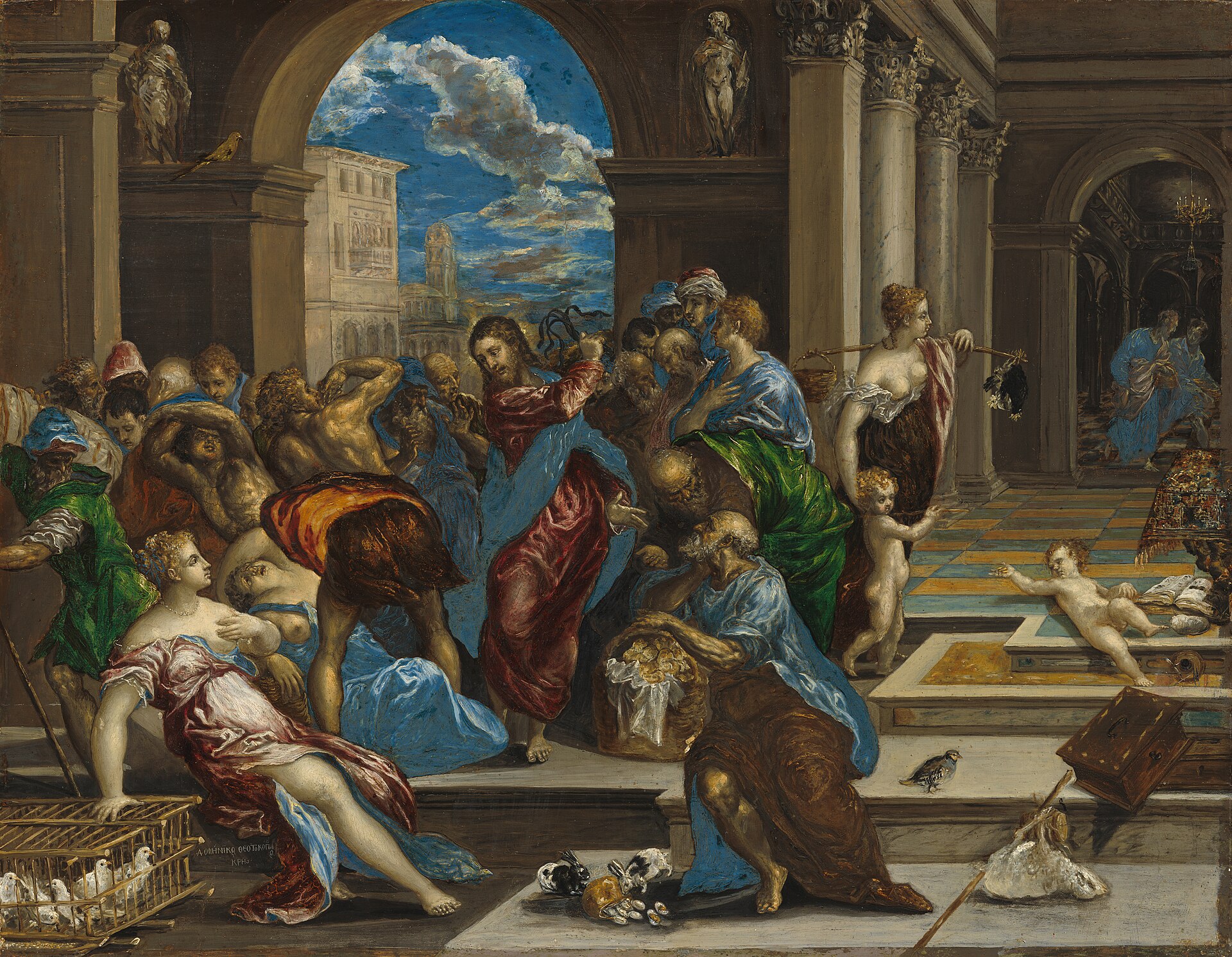
When the Passover Festival was near, Jesus traveled to Jerusalem. In the temple courts, he saw people selling cattle and other animals, and others sitting at tables exchanging money. So he made a whip out of cords and drove them out of the temple courts. He scattered the coins of the money changers and overturned their tables. To those selling doves, he said, “Get these out of here! Stop turning my Father’s house into a market!” His disciples remembered that it was written, “Zeal for your house will consume me.”
The Jews responded to him. “What sign can you show us to prove your authority to do all this?”
Jesus answered them, “Destroy this temple and I will raise it again in three days.”
They replied, “It has taken forty-six years to build this temple, and you are going to raise it back in three days?”
But the temple he spoke of was his body.
After he was raised from the dead, his disciples remembered what he had said. Then they believed the scripture and the words Jesus spoke that day.
While he was in Jerusalem during the Passover Festival, many saw the signs he was performing and believed in his name. But Jesus would not entrust himself to them, because he knew everyone. He did not need any testimony about mankind, for he knew what was in each person.
What the story means to us today
Respect for God’s house
Jesus’ proclamation, “How dare you turn my Father’s house into a marketplace!” highlights the respect God expects for what is sacred—specifically, His holy temple. We should also show similar respect for our modern-day houses of worship. These are inherently God’s houses, and we must always maintain respect through our actions, attire, and interactions with others. Our reverence for God’s holy presence reflects the love and honor we have for Him.
Deeper insights and further considerations
My Father’s house
Jesus refers to the temple specifically as “my Father’s house.” This could have been the first clue people had that Jesus was the Son of God.
However, some believe the event occurred toward the end of Jesus’ ministry, as it is mentioned as taking place later in the other synoptic gospels (Matthew, Mark, and Luke). John may have moved the event to the beginning of the chronological sequence to emphasize Jesus’ authority as the Son of God (he also immediately mentions Jesus’s resurrection). It is also possible that Jesus “cleansed the temple” twice — once, as we see here, and later when he found the temple was being used as a “den of robbers.”
The Jews ask Jesus to prove his authority
In response, the people (likely the temple leaders) ask Jesus to perform a miracle to prove he has the authority to cleanse the temple. Jesus’ reply, “Destroy this temple and I will raise it again in three days,” was, of course, referring to himself. His resurrection happened three days after he was crucified.
Still, the disciples recognize that Jesus’ actions fulfill Old Testament prophecy. Psalms 69:9 says, “Zeal for your house consumes me.” Jesus’ actions demonstrate His authority through the fulfillment of the messianic passage from Psalms.
Jesus using a whip seems violent!
Jesus took a firm stance to drive dishonest individuals from God’s house using a whip he fashioned from rope (it wouldn’t have been a real whip since weapons weren’t allowed in the temple). He wouldn’t tolerate anyone disrespecting his Father’s home. But the scriptures don’t say he whipped the animals and definitely not the money changers. He simply used the whip to herd the animals, as any shepherd would in those days.
Belief without faith
Scripture tells us that Jesus performed miracles in Jerusalem during the Passover celebration, and that people witnessed the miracles and were impressed by them – they “believed in his name.” They believed his miracles were real, and that he was a healer. However, Jesus knew the people. They would not believe he was the Son of God, the savior of mankind. They believed but would not commit to following him – they had no faith – so Jesus did not trust them.
The scientific and historical fundamentals that support the story
The temple court
The court of the Gentiles was a large outer courtyard surrounding Herod’s temple complex. This was probably where business took place since only Jews were permitted inside the inner courtyard.
The Jewish Passover and travel to Jerusalem
Passover is a celebration of Israel’s escape from Egyptian bondage. In Jesus’ day, the Jewish Passover was one of three annual events that required every Jewish male aged 12 and older to be present in Jerusalem. It was held on the night of 14-15 Nisan. Over time, it became associated with the Feast of Unleavened Bread, which immediately followed and lasted for seven days. John mentions three Passovers in his writings, which is how we know Jesus’ ministry lasted at least three years.
The purpose of the animals being sold inside the temple courts
The animals inside the temple court were being sold for sacrifices. Doves, in particular, were the sacrifices used by the poor and lower class. Holding the sale inside the temple itself was a convenience for those who traveled to Jerusalem without an animal to sacrifice.
The money changers
The men in the temple were exchanging foreign money so visitors could more easily pay the temple tax. At that time, each region had its own currencies. Money changers exchanged local currency, the silver Tyrian coin, for the visitor’s currency.
Using this story to date Jesus’ ministry
The temple leaders tell Jesus, “It has taken forty-six years to build this temple.” The number is an important clue. We can use historical accounts of Herod’s temple construction to date Jesus’ ministry.
Herod the Great began his reign in 37 BC. Josephus wrote that Herod started building the temple in his eighteenth year of reign. 46 years of construction would place this event around 27 AD. This would mean Jesus was about 27 years old if he drove the merchants from the temple court at the start of his ministry, as John stated, or 30 years old if it happened near the end, as the synoptic gospels mention. Mark already told us that Jesus was around 30 years old when he began his ministry.
Bible text
NIV
13 When it was almost time for the Jewish Passover, Jesus went up to Jerusalem. 14 In the temple courts he found people selling cattle, sheep and doves, and others sitting at tables exchanging money. 15 So he made a whip out of cords, and drove all from the temple courts, both sheep and cattle; he scattered the coins of the money changers and overturned their tables. 16 To those who sold doves he said, “Get these out of here! Stop turning my Father’s house into a market!” 17 His disciples remembered that it is written: “Zeal for your house will consume me.” o
18 The Jews then responded to him, “What sign can you show us to prove your authority to do all this?”
19 Jesus answered them, “Destroy this temple, and I will raise it again in three days.”
20 They replied, “It has taken forty-six years to build this temple, and you are going to raise it in three days?” 21 But the temple he had spoken of was his body. 22 After he was raised from the dead, his disciples recalled what he had said. Then they believed the scripture and the words that Jesus had spoken.
23 Now while he was in Jerusalem at the Passover Festival, many people saw the signs he was performing and believed in his name. 24 But Jesus would not entrust himself to them, for he knew all people. 25 He did not need any testimony about mankind, for he knew what was in each person.
NET Bible
2:13 Now the Jewish feast of Passover was near, so Jesus went up to Jerusalem.
2:14 He found in the temple courts those who were selling oxen and sheep and doves, and the money changers sitting at tables. 2:15 So he made a whip of cords and drove them all out of the temple courts, with the sheep and the oxen. He scattered the coins of the money changers and overturned their tables. 2:16 To those who sold the doves he said, “Take these things away from here! Do not make my Father’s house a marketplace!” 2:17 His disciples remembered that it was written, “Zeal for your house will devour me.”
2:18 So then the Jewish leaders responded, “What sign can you show us, since you are doing these things?” 2:19 Jesus replied, “Destroy this temple and in three days I will raise it up again.” 2:20 Then the Jewish leaders said to him, “This temple has been under construction for forty-six years, and are you going to raise it up in three days?” 2:21 But Jesus was speaking about the temple of his body. 2:22 So after he was raised from the dead, his disciples remembered that he had said this, and they believed the scripture and the saying that Jesus had spoken.
2:23 Now while Jesus was in Jerusalem at the feast of the Passover, many people believed in his name because they saw the miraculous signs he was doing. 2:24 But Jesus would not entrust himself to them, because he knew all people. 2:25 He did not need anyone to testify about man, for he knew what was in man.
NKJV
13 Now the Passover of the Jews was at hand, and Jesus went up to Jerusalem. 14 And He found in the temple those who sold oxen and sheep and doves, and the money changers doing business. 15 When He had made a whip of cords, He drove them all out of the temple, with the sheep and the oxen, and poured out the changers’ money and overturned the tables. 16 And He said to those who sold doves, “Take these things away! Do not make My Father’s house a house of merchandise!” 17 Then His disciples remembered that it was written, “Zeal for Your house has eaten Me up.”
18 So the Jews answered and said to Him, “What sign do You show to us, since You do these things?”
19 Jesus answered and said to them, “Destroy this temple, and in three days I will raise it up.”
20 Then the Jews said, “It has taken forty-six years to build this temple, and will You raise it up in three days?”
21 But He was speaking of the temple of His body. 22 Therefore, when He had risen from the dead, His disciples remembered that He had said this to them; and they believed the Scripture and the word which Jesus had said.
23 Now when He was in Jerusalem at the Passover, during the feast, many believed in His name when they saw the signs which He did. 24 But Jesus did not commit Himself to them, because He knew all men, 25 and had no need that anyone should testify of man, for He knew what was in man.
The Message
13–14 When the Passover Feast, celebrated each spring by the Jews, was about to take place, Jesus traveled up to Jerusalem. He found the Temple teeming with people selling cattle and sheep and doves. The loan sharks were also there in full strength.
15–17 Jesus put together a whip out of strips of leather and chased them out of the Temple, stampeding the sheep and cattle, upending the tables of the loan sharks, spilling coins left and right. He told the dove merchants, “Get your things out of here! Stop turning my Father’s house into a shopping mall!” That’s when his disciples remembered the Scripture, “Zeal for your house consumes me.”
18–19 But the Jews were upset. They asked, “What credentials can you present to justify this?” Jesus answered, “Tear down this Temple and in three days I’ll put it back together.”
20–22 They were indignant: “It took forty-six years to build this Temple, and you’re going to rebuild it in three days?” But Jesus was talking about his body as the Temple. Later, after he was raised from the dead, his disciples remembered he had said this. They then put two and two together and believed both what was written in Scripture and what Jesus had said.
23–25 During the time he was in Jerusalem, those days of the Passover Feast, many people noticed the signs he was displaying and, seeing they pointed straight to God, entrusted their lives to him. But Jesus didn’t entrust his life to them. He knew them inside and out, knew how untrustworthy they were. He didn’t need any help in seeing right through them.
KJV
13 And the Jews’ passover was at hand, and Jesus went up to Jerusalem, 14 And found in the temple those that sold oxen and sheep and doves, and the changers of money sitting: 15 And when he had made a scourge of small cords, he drove them all out of the temple, and the sheep, and the oxen; and poured out the changers’ money, and overthrew the tables; 16 And said unto them that sold doves, Take these things hence; make not my Father’s house an house of merchandise. 17 And his disciples remembered that it was written, The zeal of thine house hath eaten me up.
18 Then answered the Jews and said unto him, What sign shewest thou unto us, seeing that thou doest these things? 19 Jesus answered and said unto them, Destroy this temple, and in three days I will raise it up. 20 Then said the Jews, Forty and six years was this temple in building, and wilt thou rear it up in three days? 21 But he spake of the temple of his body. 22 When therefore he was risen from the dead, his disciples remembered that he had said this unto them; and they believed the scripture, and the word which Jesus had said. 23 Now when he was in Jerusalem at the passover, in the feast day, many believed in his name, when they saw the miracles which he did. 24 But Jesus did not commit himself unto them, because he knew all men, 25 And needed not that any should testify of man: for he knew what was in man.
Image Credits:
• Christ cleansing the Temple via Wikimedia Commons by El Greco (1541–1614) with usage type - Public Domain, Samuel H. Kress Collection
Featured Image Credit:
• Christ cleansing the Temple via Wikimedia Commons by El Greco (1541–1614) with usage type - Public Domain, Samuel H. Kress Collection