

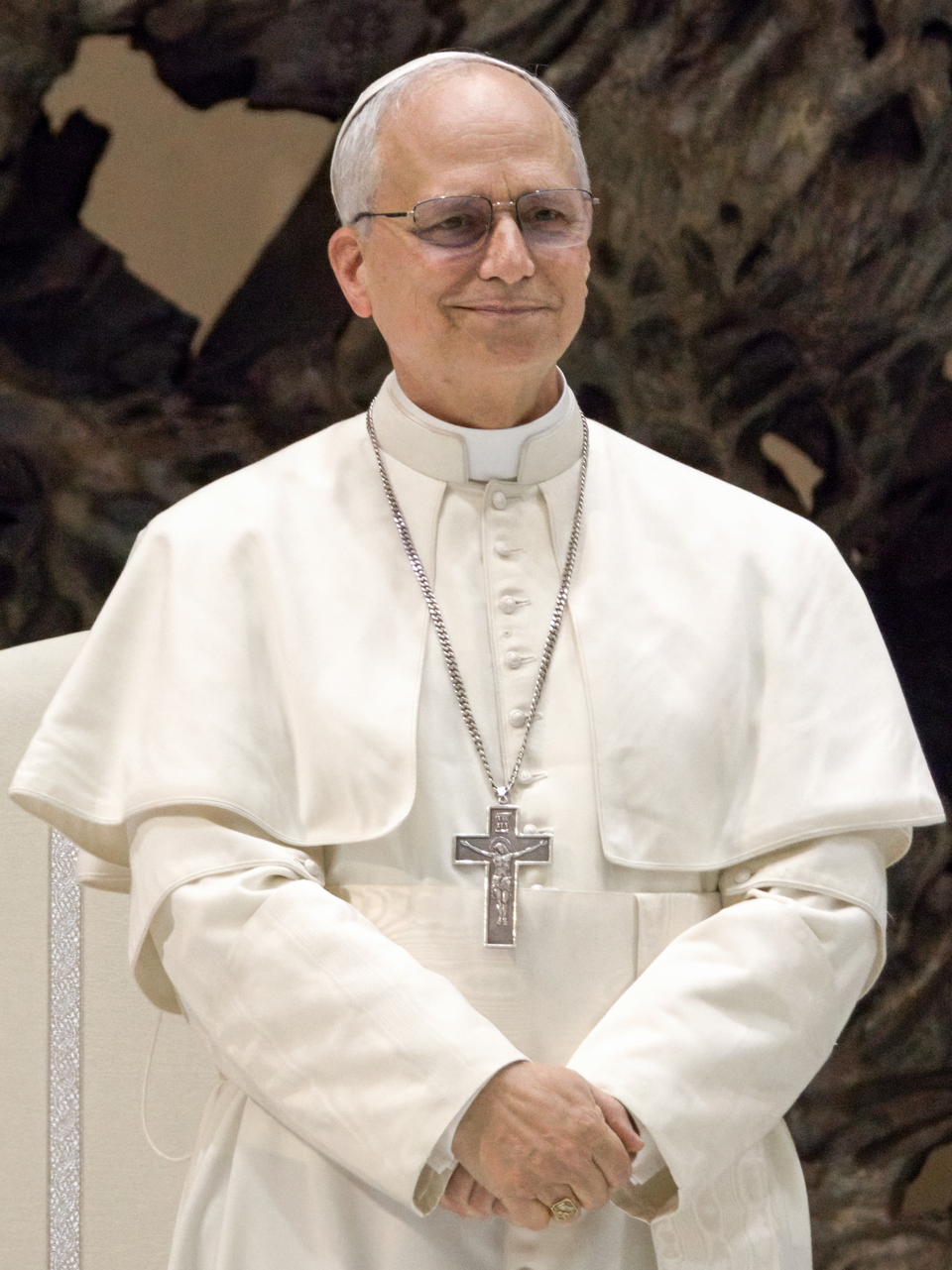
On the eve of the United States’ 250th anniversary, Pope Leo XIV, the first U.S.-born pontiff, used a live video address to the National Constitution Center in Philadelphia and a formal letter to Americans to argue that true liberty must be measured by how a nation protects human life, welcomes immigrants and safeguards religious freedom.[3][2]
Speaking from the Vatican as he received the National Constitution Center’s Liberty Medal, Leo delivered his first major address to his home country via video, urging Americans to revisit the ideals of the Declaration of Independence in light of today’s moral debates.[3][6][8] In remarks reported by Reuters, he said the semiquincentennial offers “the opportunity to reflect once again on the nation’s founding principles in the hope that America will remain ever true to the dream that has earned it the title of land of the free and home of the brave.”[3] Video of the ceremony released by the National Constitution Center shows the pope emphasizing “unity, justice and peace” as the values that should guide the republic into its next era.[4][6]
Leo’s address built on an open letter to the American people dated June 25 and published days earlier by the U.S. Conference of Catholic Bishops, a text reprinted by the National Catholic Register and summarized by EWTN News.[1][2] In that letter, the pope congratulated Americans on the 250th anniversary of the signing of the Declaration of Independence and praised its enduring voice for “liberty, equality, the pursuit of happiness, justice and democratic self-government.”[1][2] He identified religious freedom as “among the most cherished” of these principles, calling it “central to the American promise, protecting both individual dignity and the peaceful coexistence of a diverse people” and noting that this freedom has allowed the Catholic Church to flourish in the U.S. through education, healthcare and service to the poor.[1][2]
At the heart of Leo’s message was the “God-given dignity of every human life,” which he described as a foundational principle guiding the country’s development.[1][2] His letter teaches that recognizing this dignity requires “safeguarding human life from its beginning at conception until natural death” and building a society where “the vulnerable, the suffering and the forgotten are always met with compassion, solidarity and love.”[1][2] For Catholic readers, this language closely echoes the Church’s long-standing pro-life ethic and its belief that every person is created in the image of God, as in Genesis 1:26–27, and knit together by the Lord from the womb, as in Psalm 139:13–16. The pope’s insistence on protecting life “from conception to natural death” also reflects the consistent teaching that abortion, euthanasia and any direct attack on innocent life contradict the Gospel’s call to honor the least of these, a theme Jesus highlights in Matthew 25:31–46.
Leo expanded this pro-life vision beyond the unborn to include immigrants and others whose dignity is often contested.[1][2] In both his letter and his Liberty Medal remarks, he praised the United States’ history as a nation shaped by successive waves of immigration and noted that many around the world associate “America” with freedom because of its practice of welcoming newcomers.[3][4] According to Reuters’ account of the address, he contrasted this legacy with recent “hardline anti-immigrant policies” he has previously criticized as “inhuman,” implicitly challenging U.S. leaders to recover a more generous posture toward migrants.[3] His written message emphasizes that “welcoming, protecting and assisting immigrants” is integral to defending human life, observing that those arriving “seeking freedom, opportunity and a place to belong have helped to shape the nation’s character.”[1][2] For Christians, this call resonates with biblical commands to care for the stranger, such as the admonition in Leviticus 19:33–34 to love the foreigner as oneself, and Israel’s own memory of once being “aliens in the land of Egypt.”
The pope’s emphasis on religious liberty also speaks into current debates over conscience rights and the place of faith in the public square.[1][2] He describes religious freedom as protecting “the inner sphere of the person where convictions are formed and where conscience can guide the decisions made in the intimacy of the human heart,” while also guaranteeing the right “to worship according to one’s own belief” and for communities “to give public expression to their faith.”[1] Leo argues that this freedom has enabled the Church in the U.S. to contribute significantly through Catholic schools, hospitals and charities that embody the Gospel in concrete service.[2] For believers, his words recall Paul’s encouragement to pray “for kings and all who are in high positions, so that we may lead a quiet and peaceable life in all godliness and dignity” in 1 Timothy 2:1–2, and they invite reflection on how Christians can defend religious freedom not only for themselves but for neighbors of other faiths.
Throughout his interventions, Leo returned to the theme of unity, warning that the moral greatness of a nation is “manifested above all in its capacity to support, protect and cherish the lives of all, especially the most vulnerable and those whose worth is questioned.”[4] In video excerpts from the National Constitution Center event, he presents unity, justice and peace as the fruit of a society that refuses to write off any human being and that engages political disagreements with moderation and respect.[4][6] For Christians in America’s wide-ranging ecclesial landscape, the pope’s appeal aligns with New Testament visions of the Church as one body with many members in 1 Corinthians 12:12–26 and with the call in Galatians 3:28 to recognize a deeper unity in Christ that transcends ethnicity, status and nationality.
Leo concluded his letter by entrusting the United States to the patronage of the Immaculate Conception, praying that she would “continue to watch over America and protect all who dwell therein.”[2] Taken together, his Liberty Medal address and semiquincentennial letter frame the 250th anniversary not simply as a patriotic commemoration but as a spiritual examination of conscience: How closely does the nation’s current practice of law, policy and culture reflect the founding ideals of liberty, equality and the pursuit of happiness when measured against the Gospel’s demands to honor life, welcome the stranger and safeguard conscience?[1][2][3] For American Christians, the pope’s challenge may serve as an invitation to seek the welfare of their nation, as in Jeremiah 29:7, by recommitting to prayer, public engagement and concrete acts of mercy that embody a liberty shaped by love.