

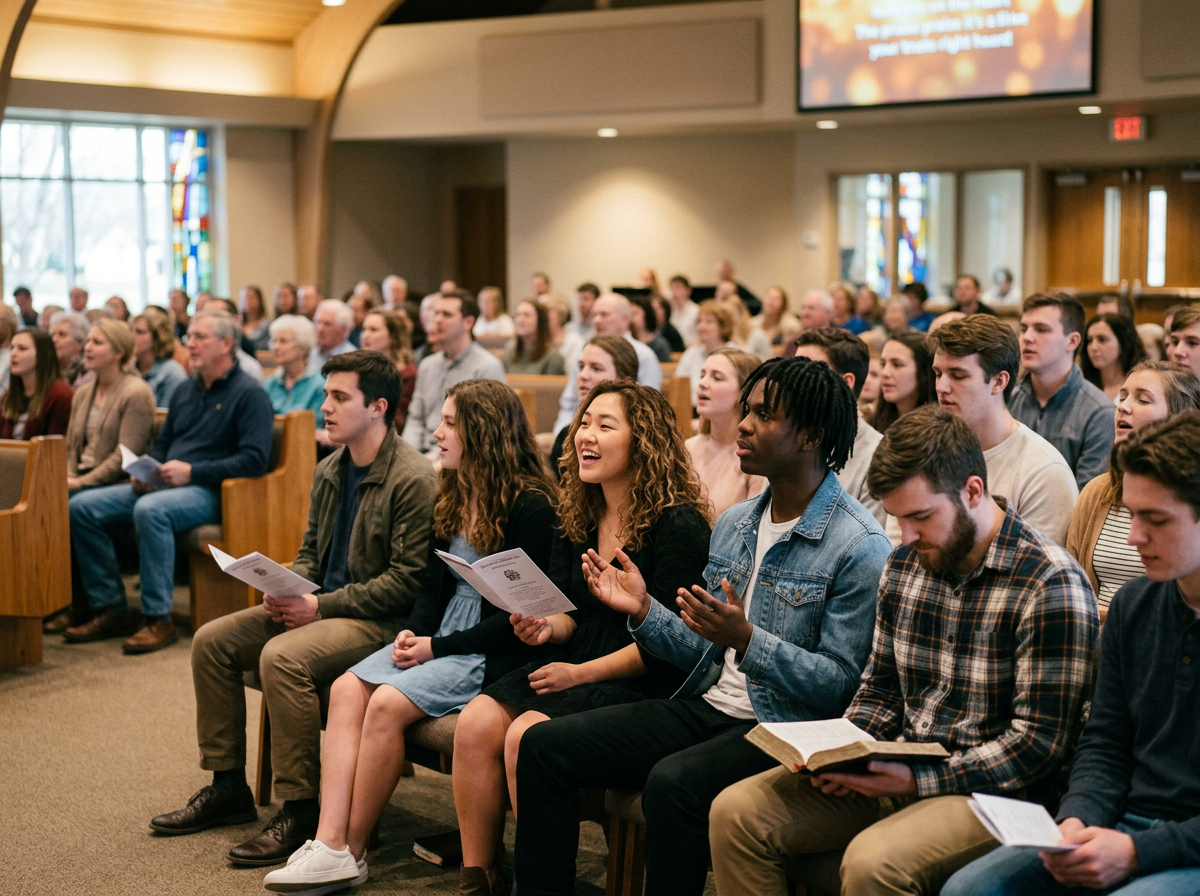
New international research is finding that young adults are now reporting the lowest levels of wellbeing, even as religious practice emerges as a powerful predictor of flourishing. Together, the Global Flourishing Study and Gallup’s global polling point to a decade-long rise in unhappiness and a surprising protective role for regular worship attendance.
The Global Flourishing Study is a multi-year, open-access project led by researchers at Baylor University, Harvard University’s Human Flourishing Program, and Gallup, following more than 200,000 adults in 22 countries. Its questionnaire tracks domains such as physical and mental health, family life, financial security, character virtues, and religious involvement, including frequency of worship service attendance now and in childhood. Study profiles published in 2025 describe it as one of the largest systematic examinations of the links between religion, virtue, and wellbeing ever undertaken.
Analyses of the first wave of Global Flourishing data show that self-reported flourishing often increases with age, with 18-24-year-olds frequently scoring lowest on composite measures of wellbeing. A popular summary of the findings noted that “the kids aren’t flourishing,” highlighting that the youngest adults report more struggles with meaning, mental health, and social connectedness than their parents and grandparents. Researchers involved in the project have described the pattern as “especially unsettling,” because it reverses the long-assumed U-shaped curve in which middle age was the low point for life satisfaction.
Across countries, respondents who attend religious services regularly—typically at least once a week—consistently report higher levels of overall flourishing than those who seldom or never attend. The Global Flourishing Study’s initial results indicate that weekly or more frequent attenders show better scores on measures of happiness, life satisfaction, and social support, even after accounting for basic demographic differences. Retrospective questions about religious attendance at age 12 likewise reveal that children who were brought regularly to worship are more likely as adults to engage in prayer, meditation, and religious reading, and to report stronger wellbeing.
Independent longitudinal research from the Growing Up Today Study, a large cohort of American adolescents, finds similar patterns. In that study, at least weekly religious service attendance in adolescence was associated in young adulthood with greater life satisfaction and positive affect, more volunteering and forgiveness, and lower risks of depression, substance use, and early sexual activity. The authors concluded that, while decisions about religion are not usually driven by health outcomes, encouraging service attendance and private practices among youth who already hold religious beliefs may offer meaningful support for their development.
Gallup’s global wellbeing polling paints a parallel picture of rising distress, with its Negative Experience Index showing record levels of anger, sadness, pain, worry, and stress in recent years. In his book Blind Spot: The Global Rise of Unhappiness, Gallup CEO Jon Clifton reports that the number of people worldwide who describe their lives as miserable has steadily climbed since Gallup began tracking wellbeing in 2006. Clifton and colleagues point to factors such as hunger, loneliness, and unhealthy work environments as major drivers of the surge in unhappiness.
The Global Flourishing Study is still in its early waves, and researchers are continuing to analyze how age, culture, and religious practice interact to shape wellbeing over time. Because the data are being collected longitudinally, future reports are expected to clarify whether religious participation not only correlates with flourishing but helps protect young people as they move through adulthood. For churches, campus ministries, and Christian nonprofits tracking the mental health crisis among youth, the emerging evidence offers both a warning about the depth of global despair and a challenge to steward religious communities as places of connection, service, and hope.