
Study the Bible like a researcher.
Read the text beside classic commentaries. Keep notes on the verse. Follow a person, a place, or an idea across every book. Free, in your browser, nothing to install.
Create a free account Read the Bible first →
No card. The reader and the public-domain commentaries are open to everyone, account or not.
New in the reader: translation accuracy
Text notes: see where the text is certain, and where it isn't
Turn on Text notes and every verse shows how closely the translations agree on it. Where they part ways, open the verse in a dozen translations side by side with the differing words marked, and see the manuscript evidence behind it.
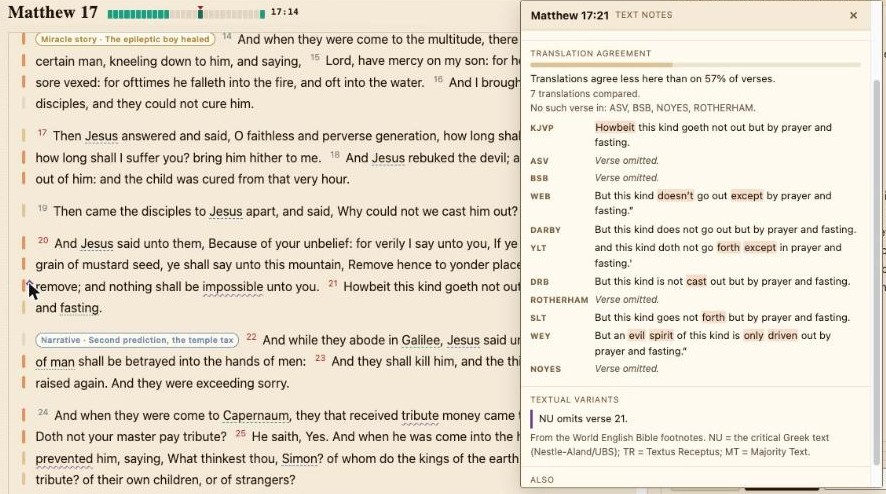
- Translation agreement — a bar beside every line, measured across 12 translations. The stronger the colour, the more differently they word the verse in English — a pointer to hard Hebrew or Greek, not a verdict on the manuscripts.
- Textual variants — verses the manuscripts disagree on (the end of Mark, John 5:4, Acts 8:37 and more) are flagged with a diamond, with the note on what each Greek or Hebrew text reads — plus well-known proposed corrections, such as “Sodom” for “strangers” in Isaiah 1:7.
- Rare words — words that occur only a handful of times in Scripture, and so are hardest to translate, underlined and linked to the lexicon.
- Passage forms — every passage labelled by what kind of writing it is: narrative, law, lament, song of trust, oracle, parable, household code and more than 40 others.
- Words of Jesus — marked in red at the verse number.
Included in every paid plan. See plans How it works
What you can do here
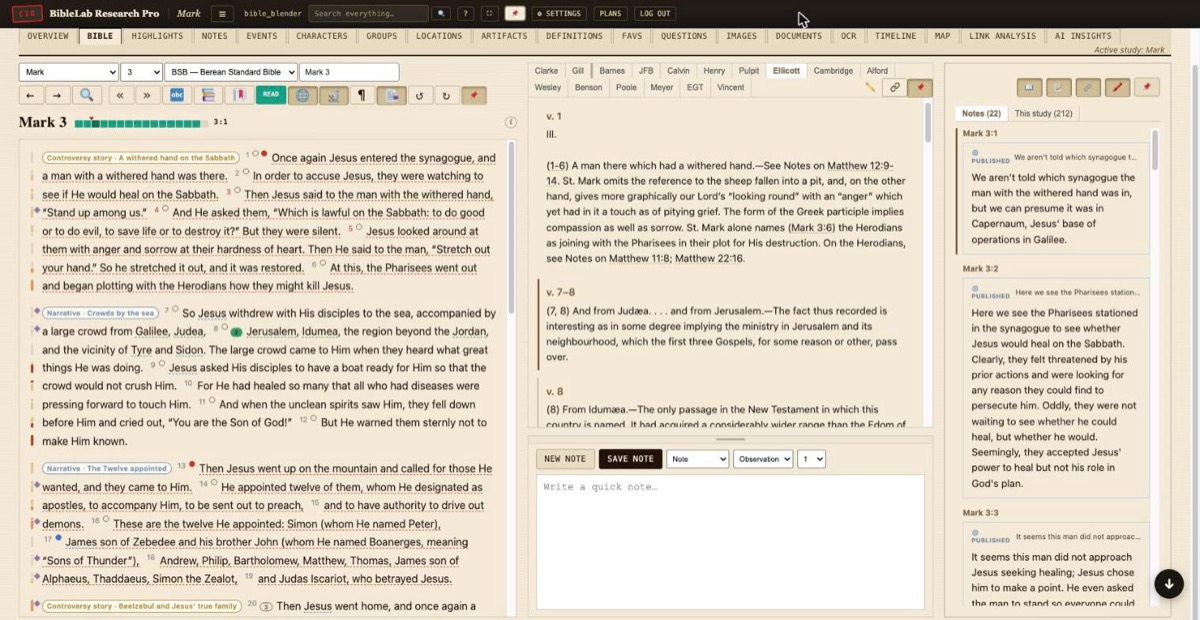
- Read the Bible in the KJV, WEB, BSB and more, and compare translations side by side.
- Compare commentaries on the verse you are reading: Matthew Henry, Jamieson-Fausset-Brown, Barnes, Clarke, Gill, Keil & Delitzsch, Scofield.
- Keep notes on any verse, highlight in colour, and find them again from the verse or the note.
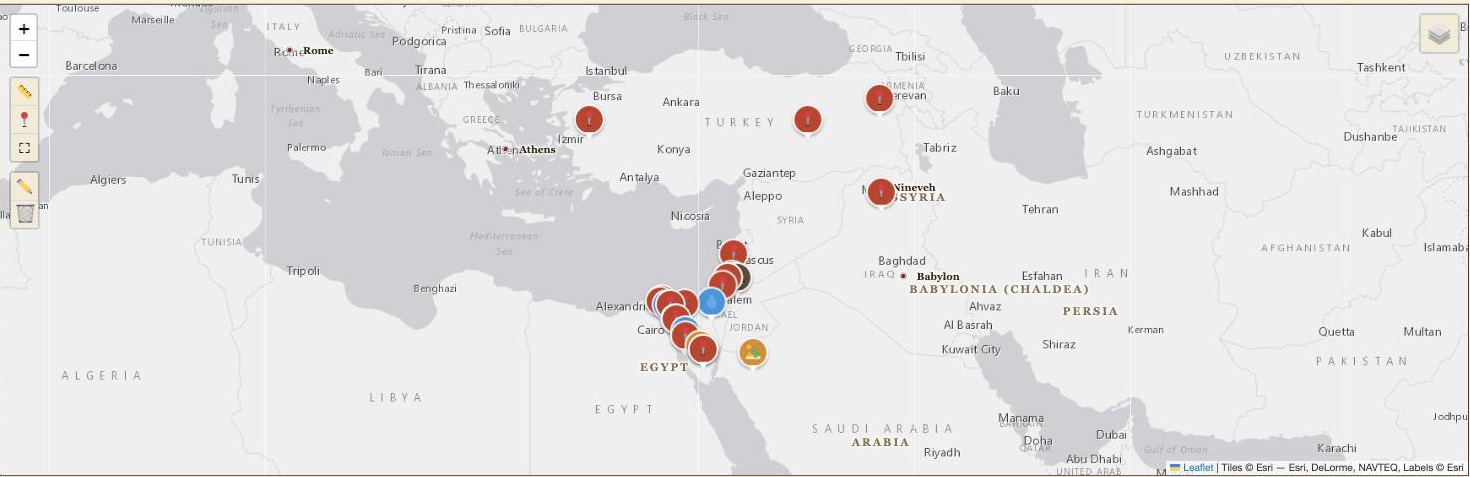
- Follow a character across books, with every place they appear, and see who they are connected to.
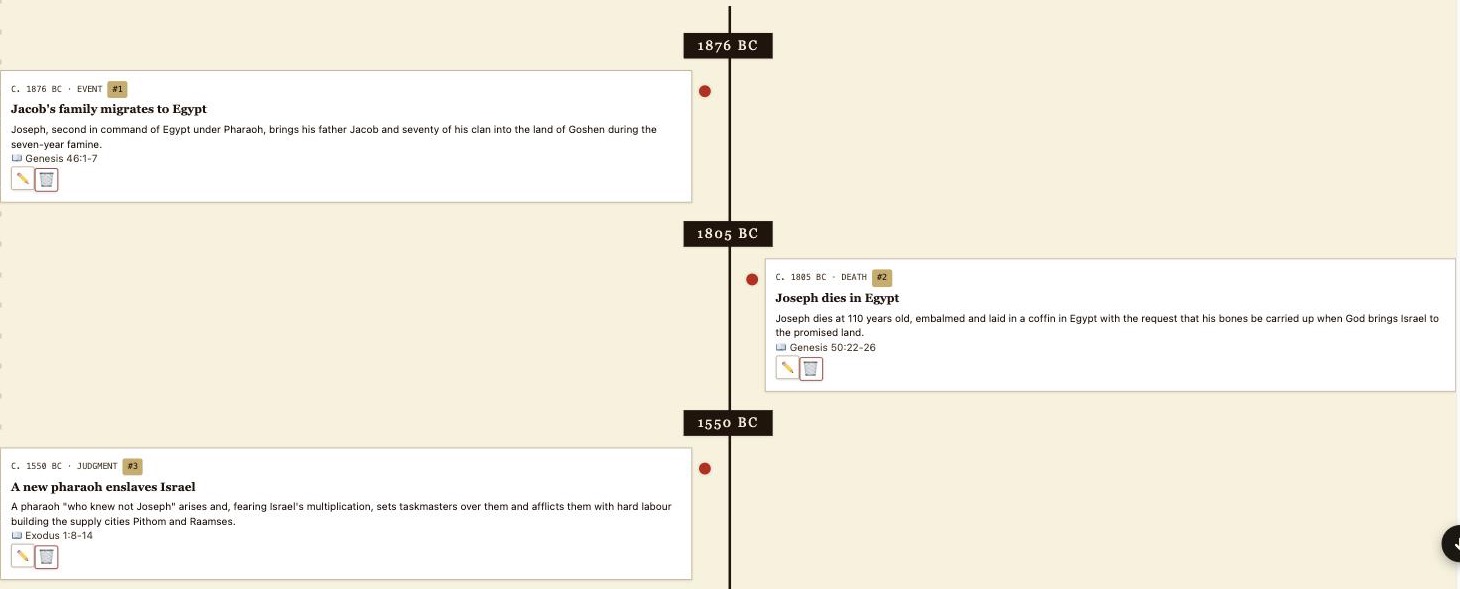
- Map a journey and lay events out on a timeline.
- Read the sources: Josephus, Enoch, the Fathers, Herodotus, and other ancient texts commentators cite, a click away from the citation.
- Weigh the text: see how far the translations agree on each verse, where the manuscripts differ, and what kind of passage you are reading.
Recently published notes
From the studies published on Bible Blender. New notes are added most days.
- Isaiah 1:11 God points out that offering more sacrifices does not atone for their sin. Unlike other religions of the day, God did not consider sacrifices to be… — All Bible Study
- Isaiah 1:10 In Isaiah's vision, God compares the Israelites to the people of Sodom and Gomorrah, Old Testament cities synonymous with evil. — All Bible Study
- Isaiah 1:1 Isaiah says the vision concerns Judah and Jerusalem—both parts of modern-day Israel. In Isaiah's time, after Solomon’s reign, the nation of Israel… — All Bible Study
- Isaiah 1:7 The desolation of the Israelites’ land likely refers to the recent Assyrian invasion of 701 BC. Assyrian troops overran the countryside and attacke… — All Bible Study
- Isaiah 1:3 Isaiah points out that animals recognize their masters and the owners who care for them, yet the Israelites fail to recognize or appreciate what Go… — All Bible Study
- Isaiah 1:2 Isaiah's opening reads like a bailiff presenting charges against a criminal in court. But the charges are so sweeping and severe that they call for… — All Bible Study
Start reading
Old Testament
- Genesis
- Exodus
- Leviticus
- Numbers
- Deuteronomy
- Joshua
- Judges
- Ruth
- 1 Samuel
- 2 Samuel
- 1 Kings
- 2 Kings
- 1 Chronicles
- 2 Chronicles
- Ezra
- Nehemiah
- Esther
- Job
- Psalms
- Proverbs
- Ecclesiastes
- Song of Solomon
- Isaiah
- Jeremiah
- Lamentations
- Ezekiel
- Daniel
- Hosea
- Joel
- Amos
- Obadiah
- Jonah
- Micah
- Nahum
- Habakkuk
- Zephaniah
- Haggai
- Zechariah
- Malachi
New Testament
Free, without an account
- The Bible in the public-domain translations, and the Book of Enoch and other ancient texts.
- The classic commentaries, verse by verse.
- Every published study's notes, on the chapter pages.
- Any study shared with you by link.
With a free account
- A study of your own: notes, highlights, characters, places, events, timeline, map, documents.
- Your reading position and notes kept between visits.
- Optional paid plans add more studies, sharing, modern translations, scholarly commentaries, and Text notes.