

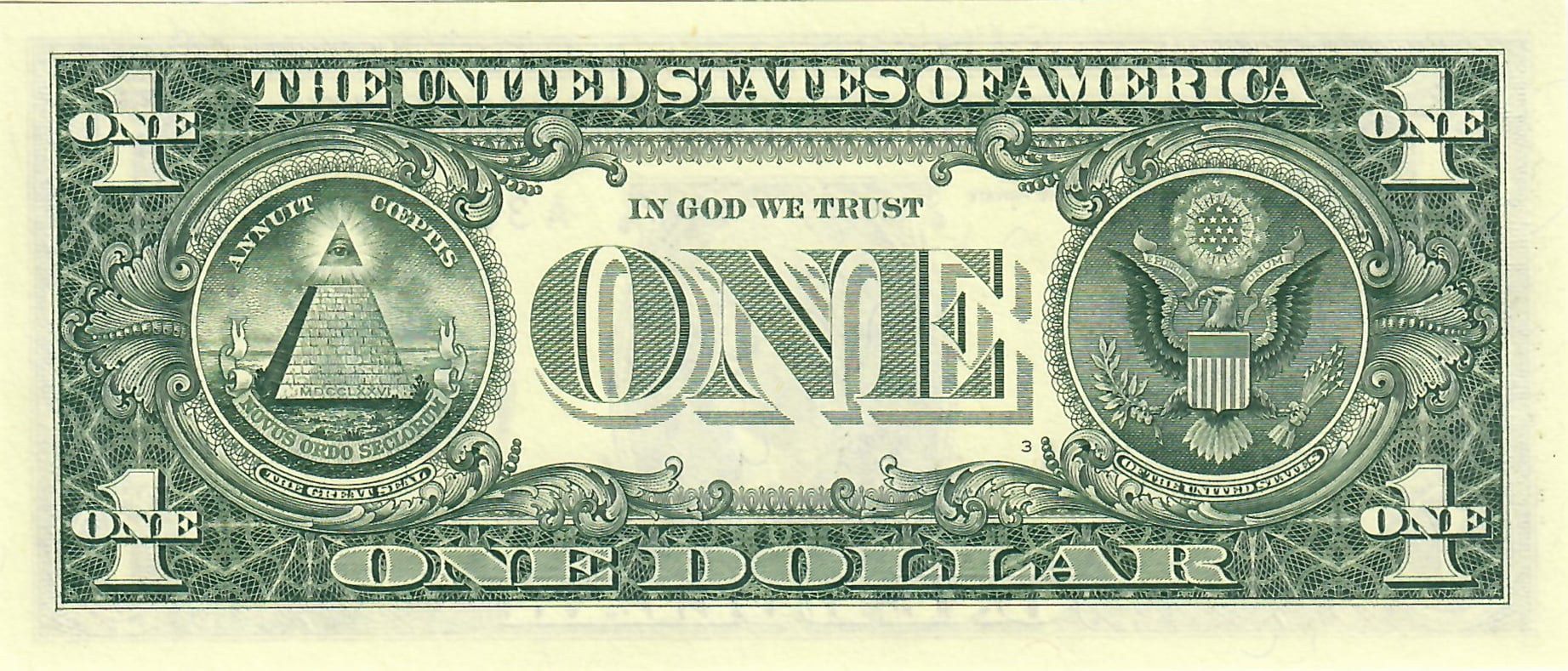
As the United States marks 250 years of independence, the words “In God We Trust” on every dollar bill invite a fresh look at where this motto came from and what it now means for Christians living between church and state.[1][2] Far from being a phrase penned by the Founding Fathers, the inscription grew out of Civil War anxiety, was solidified in the Cold War, and has since become a flashpoint in debates over religious liberty and civil religion.[1][3][5]
The story begins not in 1776 but in 1861, when a Pennsylvania minister, the Rev. M. R. Watkinson, wrote to Treasury Secretary Salmon P. Chase urging “the recognition of the Almighty God in some form on our coins.”[3][5] Watkinson feared that omitting God from national symbols would leave the Union under “the ignominy of heathenism” and argued that a Christian motto would place the country “openly under the divine protection we have personally claimed.”[3][5] Chase agreed in principle, asked the director of the Mint to prepare designs, and eventually settled on the wording “In God We Trust,” drawing on language similar to an obscure stanza of Francis Scott Key’s “Star-Spangled Banner” that declares, “And this be our motto: In God is our trust.”[1][3] Congress approved the new motto for coins on April 22, 1864, and that year the first two‑cent piece bearing “IN GOD WE TRUST” was minted.[1][3][4]
From that modest beginning the phrase slowly spread across American coinage.[1][5] After appearing on various coins in the late 19th century, Congress in 1908 required that “In God We Trust” be placed on all gold and silver coins and on the one‑cent piece wherever the design allowed.[2][6] By 1938, the motto was effectively standard on all U.S. coins.[5] A key shift came in the 1950s: in 1955, the 84th Congress passed a joint resolution requiring that the motto appear on all U.S. currency, not just coins, and President Dwight D. Eisenhower signed it into law on July 11 of that year.[2][5][6] The first paper money carrying the motto—a redesigned one‑dollar silver certificate—entered circulation on October 1, 1957.[2] One year earlier, on July 30, 1956, Eisenhower had signed another measure formally declaring “In God We Trust” to be the national motto, replacing the long‑informal Latin phrase E pluribus unum (“Out of many, one”).[2][3][6]
That mid‑century burst of activity reflected more than artistic preference; it was deeply shaped by Cold War politics and public theology.[2][3][6] In 1954, Congress had already added the words “under God” to the Pledge of Allegiance, a change frequently justified as a way to distinguish the United States from “atheistic communism.”[3][6] Two years later, making “In God We Trust” the official national motto and printing it on all paper currency further underscored the idea that belief in a Creator marked America off from the Soviet Union.[2][6] Legal scholars and religious liberty advocates often describe such practices as part of America’s “civil religion”—a set of public rituals and phrases that invoke God while stopping short of endorsing a particular church.[3][5] Over time, even some Supreme Court justices have suggested that phrases like “In God We Trust” have become “ceremonial” and lost much of their specifically religious content.[1][5]
The courts have been asked repeatedly to decide whether “In God We Trust” on money violates the First Amendment’s ban on establishing religion.[5][7] In the 1970 case Aronow v. United States, the Ninth Circuit Court of Appeals ruled that the motto “has nothing whatsoever to do with the establishment of religion” and serves instead a “patriotic or ceremonial” function.[7] Subsequent challenges, including lawsuits brought by atheist activists, have largely failed; judges have tended to treat the motto as an example of “ceremonial deism”—religious language that, because of long custom, is seen as having a primarily symbolic rather than devotional purpose.[5] At the same time, groups concerned about church–state separation continue to argue that such inscriptions signal government favoritism toward theism and risk marginalizing citizens who do not believe in God or who follow non‑monotheistic faiths.[3][5]
For Christian readers, the motto raises a deeper theological question: What does it mean actually to trust in God, and can a nation do so by law or inscription alone? Scripture repeatedly calls God’s people to place their confidence in him rather than in political or military power: “Some trust in chariots and some in horses, but we trust in the name of the Lord our God” (Psalm 20:7).[5] Proverbs urges believers to “trust in the Lord with all your heart and lean not on your own understanding” (Proverbs 3:5–6), while Jesus reminds his followers to “give back to Caesar what is Caesar’s, and to God what is God’s” (Matthew 22:21). These passages suggest that genuine trust in God is first a matter of worship, obedience, and reliance, not of state slogans. When a government invokes God’s name in law, Christians have reason both to be grateful that public life acknowledges a Creator and to be cautious that God’s name not be used as a mere badge of national virtue.[3][5]
Historic Christian teaching on government also helps frame the issue. The apostle Paul describes governing authorities as “God’s servants” who are meant to promote justice (Romans 13:1–7), and Paul urges believers to pray “for kings and all those in authority” so that society may be peaceful (1 Timothy 2:1–2). Under that lens, a motto like “In God We Trust” can be read as an aspiration: a reminder that human leaders are accountable to a higher authority and that national strength does not rest only on economic or military power.[5] Yet Christians are also warned against confusing any earthly nation with the kingdom of God (John 18:36) and against using religious language to cloak injustice or self‑reliance (Isaiah 29:13). The ongoing debates—legal, political, and pastoral—around America’s motto invite believers to examine whether their own trust is truly in the Lord or merely in a civil religion that speaks of God without submitting to him.
As Americans handle coins and bills marked “In God We Trust,” the history behind the phrase can serve as both caution and invitation.[1][3][5] The motto arose at a moment of national crisis, was reshaped in another era of global tension, and now sits at the intersection of constitutional law and public theology.[2][3][5] For Christians, knowing that story can prompt prayer for the country, honest engagement in debates over religious liberty, and a renewed desire to live out the trust in God that our currency proclaims—through lives of repentance, justice, and hope that bear witness to the One in whom we ultimately place our confidence.