

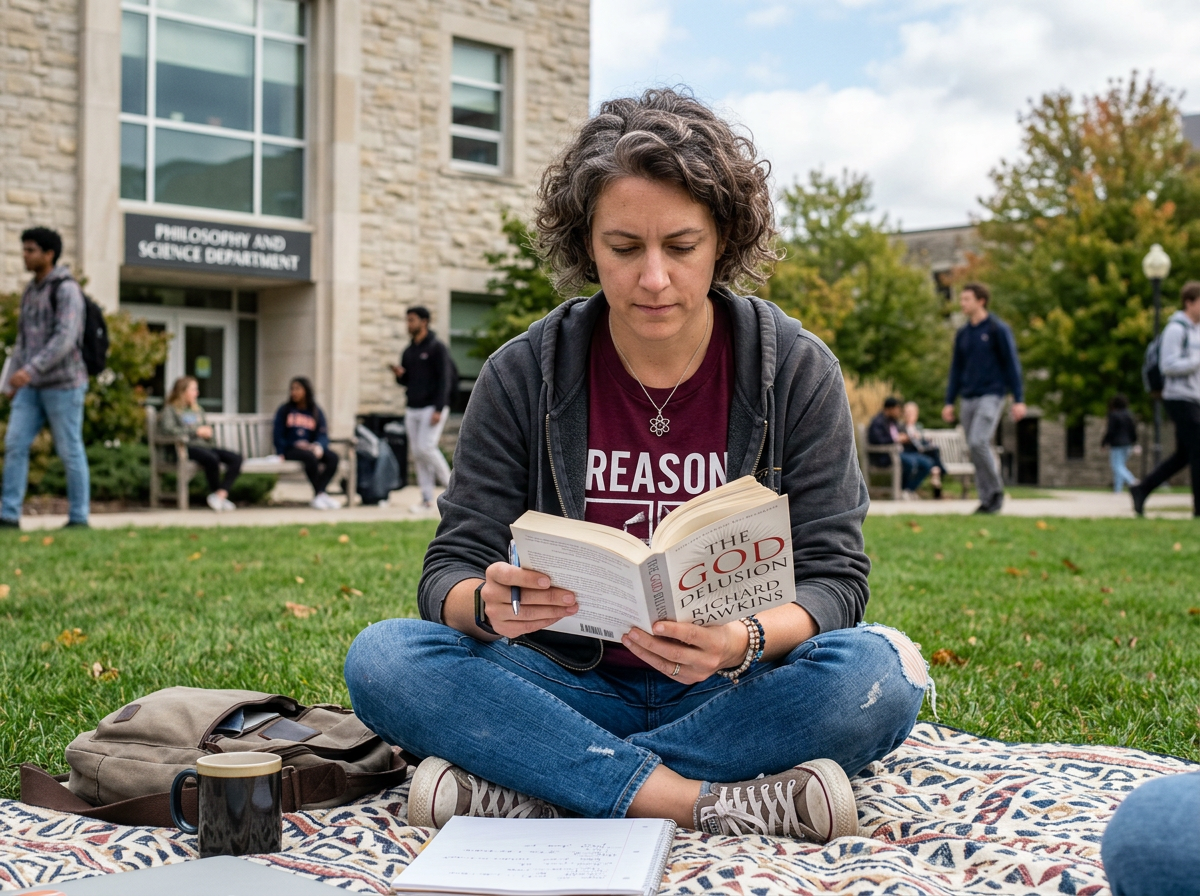
Oxford theologian Alister McGrath says New Atheism is fading after failing to answer questions about meaning and purpose, while a growing number of young people are revisiting Christianity.
“The New Atheism seems to have tanked,” McGrath told The Telegraph in an interview published Nov. 3. “It’s on its way out, because people have seen that it was never really answering the big questions.”
McGrath, an emeritus professor of science and religion at the University of Oxford, said he has observed a change in the conversations young people bring to him. After the publication of his 2007 book The Dawkins Delusion, many asked how Christianity could withstand the arguments of prominent atheists such as Richard Dawkins and Christopher Hitchens.
“The tone and the subject of the questions had changed,” McGrath said of conversations that resumed after his return to Oxford in 2014. “In these conversations, there was a revival of interest — of people looking, and seeing Christianity as able to answer the questions they were posing.”
He told the newspaper that he is “seeing a growth in young people wanting to talk about Christianity,” but acknowledged that his evidence is based on personal encounters rather than a formal study. The people he described were mostly students and adults in their late 20s and 30s from Britain, the United States, Europe and Asia. “I accept that this is anecdotal,” he said, adding that he kept no records of the meetings.
McGrath’s comments come amid competing claims about religious interest among younger Britons. The Telegraph reported that a 2025 Bible Society survey conducted by YouGov claimed a 16% increase between 2018 and 2024 in Gen Z Britons attending church services, but said the report was later withdrawn after criticism. The British Social Attitudes Survey, by contrast, reported a 9% decline over the same period in 18- to 34-year-olds describing themselves as religious.
McGrath’s background spans science and theology. According to his official University of Oxford biography, he studied natural science before earning a doctorate in molecular biophysics, later switching to theology. He served as Oxford’s professor of historical theology, taught at King’s College London and returned to Oxford as professor of science and religion before retiring in 2022.
His latest book, Rethinking Christianity: A Thoughtful Guide to a Life-Changing Faith, argues that Christianity can address people’s search for meaning, significance and purpose. McGrath said uncertainty in political, social, economic and environmental life is prompting some young people to reconsider religion, but he did not offer a numerical estimate for the trend.