

Israel’s election authorities have rejected claims that Arab-led parties stole the country’s Oct. 27 parliamentary election, even as an investigation into alleged foreign interference continues. The Central Elections Committee said the vote was conducted lawfully and that there was no evidence of a systematic breach of election integrity.
The dispute followed final results that left Prime Minister Benjamin Netanyahu’s bloc with 53 of the Knesset’s 120 seats. A bloc led by former military chief Gadi Eisenkot won 48 seats, while the Arab-led Ra’am and Joint List factions won a combined 19 seats, giving them potential influence over efforts to form a government.
Netanyahu’s Likud party has alleged bribery, intimidation, multiple voting and foreign-backed efforts to increase Arab turnout, but has not publicly produced evidence establishing widespread fraud. The party said the election was “stolen by Arab parties,” while Arab political leaders rejected the allegations as incitement and an attempt to delegitimize their voters.
Central Elections Committee chairman Justice Noam Sohlberg ordered the Shin Bet security service to examine allegations of foreign interference. President Isaac Herzog said the claims should be investigated, but also described the election as an important demonstration of democratic participation. In a statement on the presidency’s website, Herzog said the integrity of Israel’s elections was “a supreme democratic value” and called for anyone responsible for wrongdoing to be held accountable. The President of Israel’s statement
Herzog is expected to consult representatives of the elected factions after the official results are published before selecting the candidate most likely to form a coalition. The Knesset’s election briefing says the Central Elections Committee publishes the official results and seat distribution within eight days of Election Day, with the final tally appearing in the Official Gazette. Knesset election briefing With neither major bloc holding a majority, coalition negotiations could produce a government led by Netanyahu or Eisenkot—or lead to another election if no candidate can assemble sufficient support.
Image Credits:
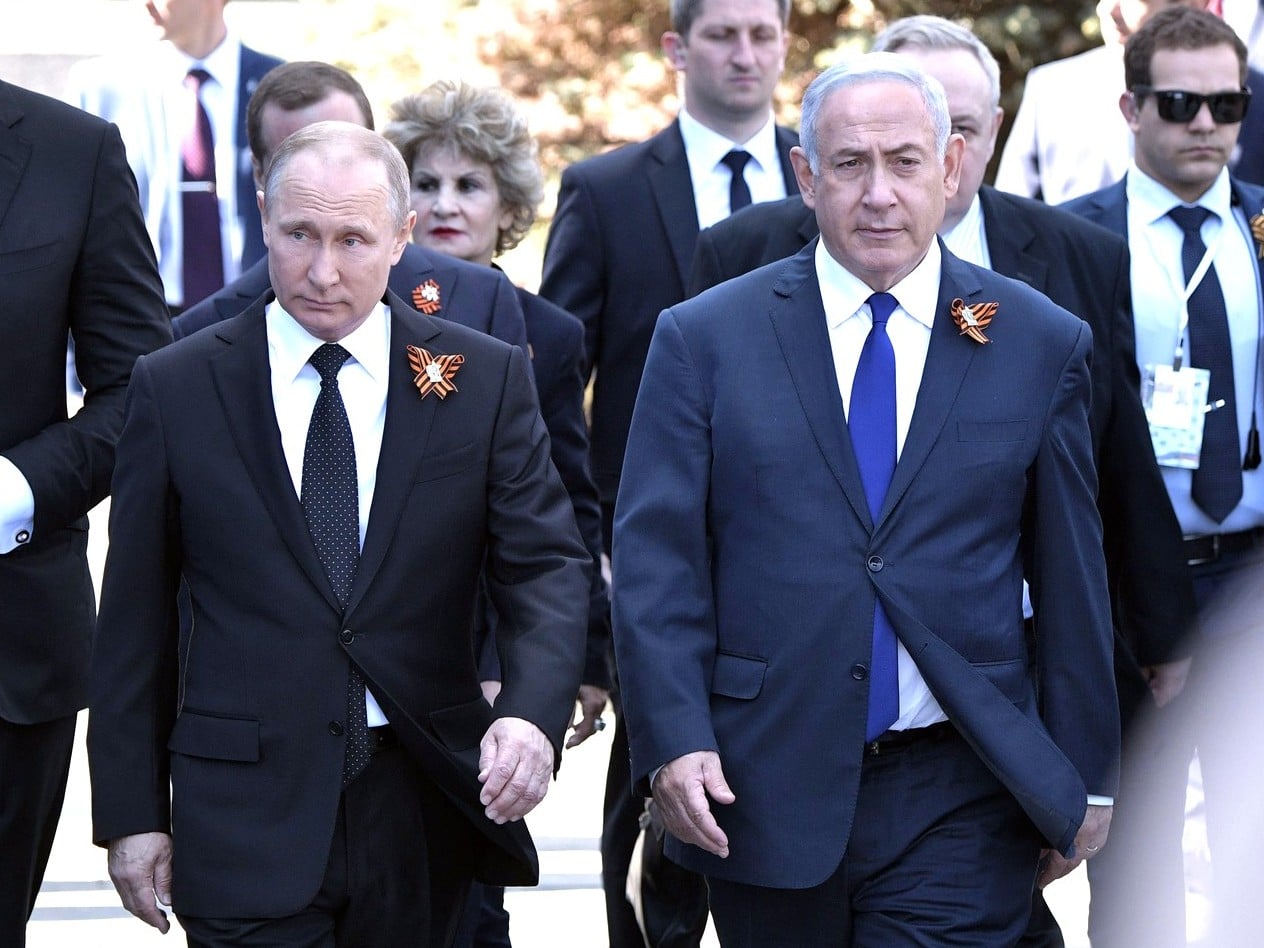
• The prime minister of Israel, Benjamin Netanyahu accompanying to the russian Slavic president of Russia Vladimir Putin at the 2018 Moscow Victory Day Parade. via Wikimedia Commons by The Presidential Press and Information Office with usage type - Creative Commons License, By kremlin.ru, CC BY 4.0, https://commons.wikimedia.org/w/index.php?curid=69025075
Featured Image Credit:
• The prime minister of Israel, Benjamin Netanyahu accompanying to the russian Slavic president of Russia Vladimir Putin at the 2018 Moscow Victory Day Parade. via Wikimedia Commons by The Presidential Press and Information Office with usage type - Creative Commons License, By kremlin.ru, CC BY 4.0, https://commons.wikimedia.org/w/index.php?curid=69025075