

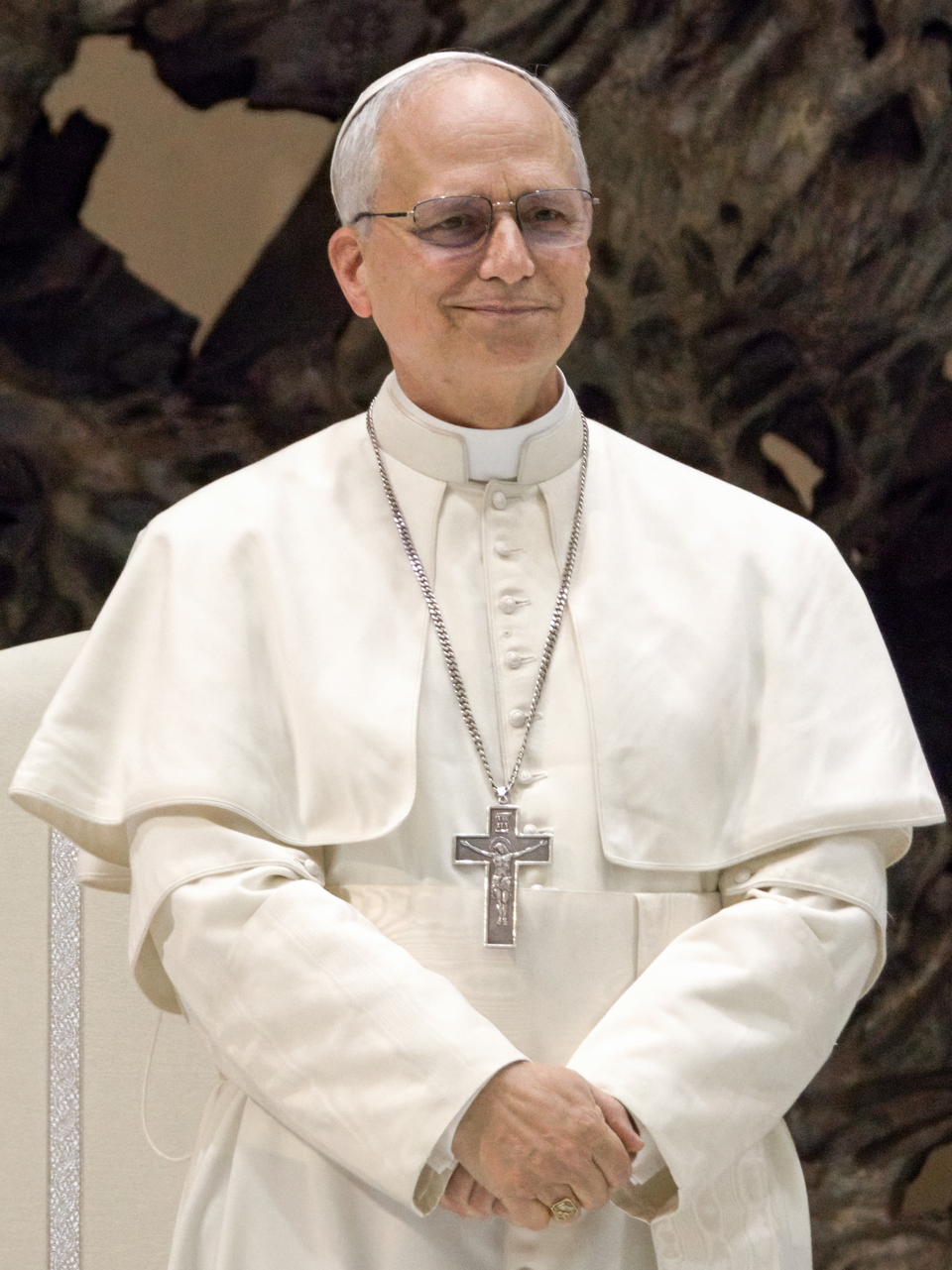
Pope Leo XIV has called on France’s Catholic bishops to assert the Church’s “prophetic” voice in a society shaped by strict secularism, urging them not to retreat from public debate as he continues an apostolic journey through one of Europe’s most avowedly non-religious nations.
Meeting with the Bishops of France during his visit, the pope framed the Church’s role as a necessary contribution to the country’s common life. In an official text published on the Holy See’s website, he told the bishops, “For this reason, the voice of the Church has every right to be heard in the public square. By its nature, it possesses a prophetic authority. Even if it is not always understood, her voice is nonetheless needed.” He went on to warn that France’s particular form of laïcité, or secularity, must not hinder the Church’s mission, saying, “You currently live under a particular form of secularity (laïcité), born of a turbulent history that is now more peaceful, but which must allow the Church to carry out her mission,” according to the same address released by the Vatican’s press office (vatican.va).
Leo XIV coupled that appeal with a concrete call to defend religious freedom in the public sphere. In his message to the bishops, reported by outlets including Vatican News and RVA News, he urged them “to remain vigilant in defending the freedom and rights of the Church to evangelize, to educate about true freedom, and to worship publicly, so that charity may be exercised visibly in the name of Jesus Christ.” Catholic outlet Aleteia highlighted the pope’s encouragement to “rise up with hope” and “never grow weary” as he called French Catholics to renewed evangelization amid skepticism toward institutional religion.
The pope’s remarks to church leaders came alongside a separate address to political authorities and civil society at the Élysée Palace in Paris. In that speech, also posted in full by the Holy See (press.vatican.va), Leo XIV argued that authentic secularity “does not exclude religion” but seeks dialogue between the state and religious communities in service of the common good. He insisted that a Christian engaged in public service “guided by the light of his or her conscience illumined by faith” should not be seen as a threat to national unity, challenging interpretations of laïcité that aim to push faith entirely out of public life. Coverage in Catholic and secular media, including The Catholic Standard and France 24, has noted that Leo’s visit comes as France debates issues such as abortion and euthanasia where Church teaching and public policy diverge.
France’s legal and cultural framework of laïcité forms the backdrop for the pope’s appeal. Since the 1905 law formally separating churches and the state, and with the constitution defining France as an “indivisible, secular, democratic and social Republic,” religion is practiced freely but public institutions must remain neutral, as explained by public broadcaster RFI. That law ended state recognition and funding of religion, while guaranteeing freedom of conscience. Exceptions remain in regions such as Alsace-Moselle, where a concordat system still provides formal status and state remuneration for some clergy, a contrast that RFI notes is on the pope’s itinerary with a planned visit to Metz. Background analyses, including an overview on the Catholic Church in France, stress that this secular model emerged from a long, often violent conflict between the Republic and the Church, leaving enduring anticlerical currents in parts of French society.
The Church itself faces internal challenges that shape how its public voice is heard. Investigative reporting cited by The Washington Post points to decades of clerical sexual abuse scandals that have deeply damaged trust, even as regular Sunday Mass attendance among baptized Catholics has fallen to around 2 percent. At the same time, several outlets, including a Vatican dispatch in America Magazine, observe an unexpected rise in adult conversions to Catholicism in France, with some dioceses reporting sharp increases since the Covid-19 pandemic. Leo XIV’s insistence on the Church facing its failings while still speaking boldly in public has been described by analysts as an attempt to hold together repentance and mission; one summary of his meeting with the French Episcopal Conference notes that he spoke of the Church’s “prophetic authority” even as he prepared to meet abuse survivors later in the trip (Ground News).
French media have underlined that the pope’s public events themselves test the practical application of laïcité. RFI reports that his program includes processions, large gatherings and an open-air Mass in central Paris, all organized under rules that require civil authorities to remain neutral while permitting religious events in public spaces on the same basis as other assemblies. Commentators in outlets such as France 24 note that allowing such gatherings does not amount to state endorsement of religion, provided public order is maintained. Leo XIV’s decision to speak strongly about the Church’s right to be heard, while engaging directly with government leaders, has put the balance between France’s secular identity and its historic Catholic roots back in the national conversation.
The Conference of Bishops of France has not yet issued a detailed roadmap in response to the pope’s address, but early reactions gathered by Catholic outlets suggest that many bishops see his words as a mandate to strengthen the Church’s presence in debates over social policy, education and care for the marginalized. Reporting from RVA News and Aleteia indicates that dioceses are already reflecting on how to defend space for Catholic schools, chaplaincies and charitable works within existing secular regulations. As Leo XIV continues his journey with further liturgies and meetings across France, his appeal for the Church’s “prophetic” voice to be heard in the public square is likely to shape both ecclesial discussions and wider debates over the meaning of laïcité in contemporary French life.