

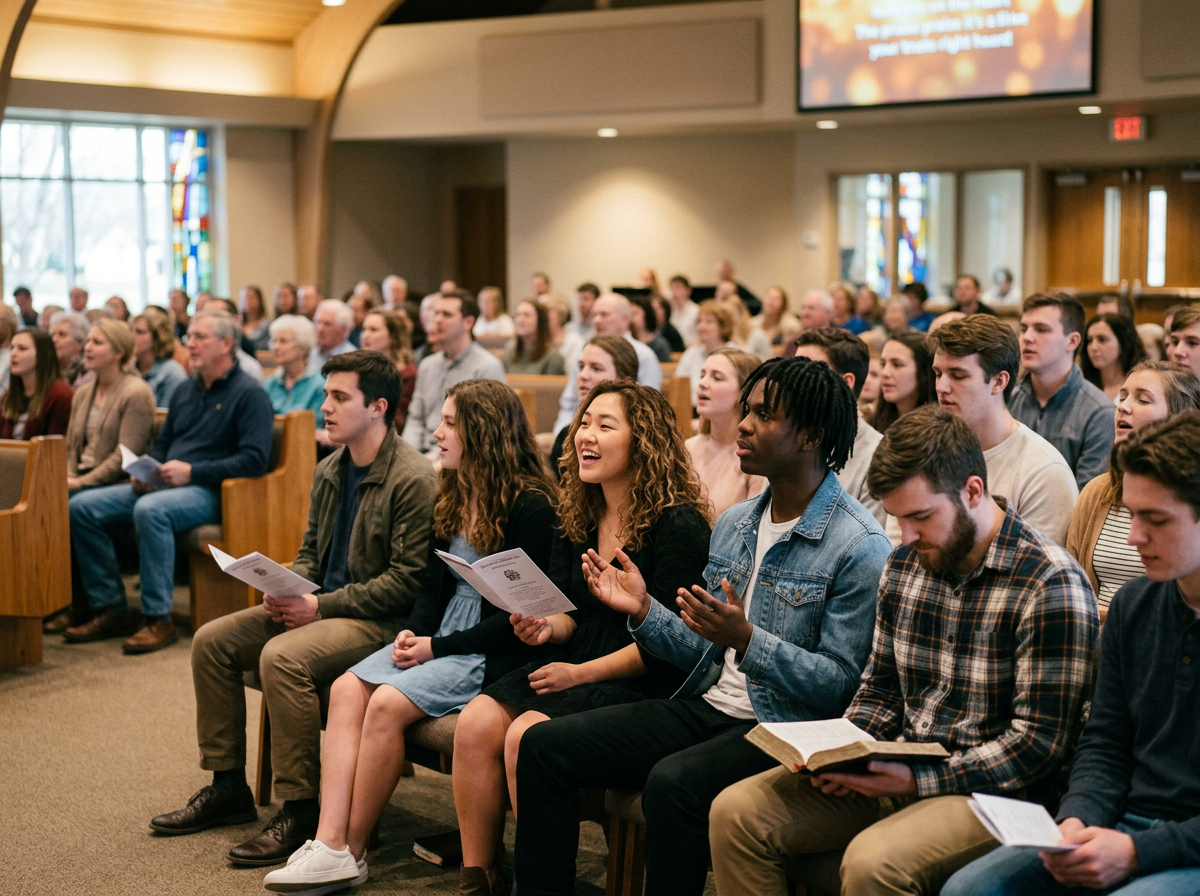
A new Evangelical Alliance study suggests that many young adult Christians in the UK are not retreating from public faith but are actively sharing Jesus, immersed in Scripture and deeply planted in local church life, even as they navigate a contested cultural landscape.
In its Faith in Action report, the Evangelical Alliance surveyed just over 600 Christians aged 18 to 34 on their experience of faith and evangelism in the UK. A summary document explains, “We surveyed 611 Christians under the age of 35 between 19 February and 23 March 2026, using our own networks, including emails and social media posts.” The Alliance, which describes itself as “Together making Jesus known since 1846,” undertook the study to understand how young Christians practice their faith today, what they encounter on social media and how they view evangelism.
The research paints an encouraging picture of evangelistic activity and expectation among younger believers. According to coverage of the report, a clear majority—around 85 per cent of respondents—said they had discussed Jesus with someone who was not a Christian within the previous six months. Roughly three quarters, about 74 per cent, believed that people around them were receptive to conversations about faith, indicating that many young Christians perceive an openness in their peer networks despite wider narratives of secularisation. This confidence sits alongside other recent findings showing that younger evangelicals in particular report growing assurance in sharing their faith, including studies that have measured the impact of initiatives like the Bible Society’s Quiet Revival report on evangelicals’ willingness to talk about Jesus.
The survey also highlights strong patterns of church involvement and biblical engagement. Reporting on Faith in Action notes that more than nine in ten respondents—93 per cent—attend church at least weekly, with nearly a third attending multiple times each week. Over half said they serve on a ministry or volunteer team, suggesting that many are not merely spectators but active contributors to congregational life. An article summarising the findings adds that over 94 per cent of young evangelicals read the Bible at least weekly, with around 74 per cent engaging with Scripture daily. Confidence in Scripture is similarly high: about 89–90 per cent said they felt able to make sense of the Bible, and roughly a third described themselves as “very confident,” underscoring the role of regular Bible reading in sustaining witness.
At the same time, other research offers a note of caution and context, showing that confidence does not always translate into frequent evangelistic conversations across all age groups. A 2022 peer evangelism study by Youthscape and Scripture Union found that only 34 per cent of young Christians told researchers they share their faith regularly, even though 65 per cent agreed or strongly agreed that they had the confidence to do so. The same report identified perceived obstacles such as not knowing answers to difficult questions and peers not being interested in faith as significant barriers. Wider polling by the Institute for the Impact of Faith in Life in 2024 suggested a “crisis of confidence” among some Christians in public life, with 38 per cent of Christian and Jewish respondents saying they preferred not to tell people about their faith, compared with 29 per cent of Muslim respondents. Taken together, these studies indicate that the Evangelical Alliance sample may represent a particularly engaged subset of young believers, while also pointing to areas where churches can still strengthen support for everyday witness.
For Christian readers, the Faith in Action findings resonate deeply with biblical calls for young believers to live and speak courageously. Paul urged Timothy, a young leader, “Don’t let anyone look down on you because you are young, but set an example for the believers” in speech, conduct, love, faith and purity (1 Timothy 4:12). Jesus’ Great Commission sends disciples of every generation to “go and make disciples of all nations” (Matthew 28:19–20), and Peter exhorts the church to “always be prepared to give an answer to everyone who asks you to give the reason for the hope that you have” (1 Peter 3:15). When young adults are both confident in Scripture and embedded in worshipping communities, the combination can fuel a Rom 1:16 kind of boldness—“not ashamed of the gospel”—expressed in ordinary conversations at work, university and online.
The report also raises important questions for church leaders and ministries seeking to disciple younger Christians in a “contested culture.” Evangelical Alliance resources on confident faith note the pressures that come with navigating social media, pluralism and contested public debates, even for believers who are committed and hopeful. Faith in Action suggests that many young adults are already speaking about Jesus, but other studies show they still long for greater confidence and practical help. Churches may therefore need to invest more intentionally in training that equips young believers to answer hard questions, engage graciously in digital spaces and persevere when evangelistic conversations are met with indifference. Supporting robust Bible teaching, intergenerational mentoring and opportunities to serve together can help ensure that the courage highlighted in the Evangelical Alliance report is sustained and deepened over the long term.